Search Lil' Blogger

Wednesday, 16 November 2016

Interview #3

I have just completed my 3rd interview via audio call. I have again successfully made a voice recording on my phone which I will be transcribing the second I have finished this blog!

My interview this time was with a professional dancer who was in fact a friend I made during my time training. It was fantastic to hear about what they had been up to and how they feel about their current practice. An example of some of the questions I posed are as follows:

  • Do you feel that in your current place of employment there is a good support system for the dancers?
  • What are the conditions like in which you rehearse?
  • Do you think having an expert legal professional who you can access would be useful?
  • Do you think dancers may be reluctant to pursue a legal dispute due to the risk of gaining a bad reputation? 
It was fantastic to get another perspective from a practitioner who understands and is working within the dance industry. It is interesting how so many of the comments made relate to those from my previous interview (Interview #2) also with a professional dancer.

What is becoming clear is that dancers are often not treated as they should be by employers. Equity remarkably sets the standards for how performers in the industry should be treated yet this is not necessarily upheld by all. I feel that I am starting to unearth some of these issues and think of ways in which they can be greater understood and better advocated for in the future.

Overall it was another very positive experience and I look forward to pulling all of the data together to form my Critical Review. The pieces are starting to fall into place and I now feel ready to start drafting my Critical Review and finalising my literature review.

Image result for making sense


From Focus Group to Interviews...

After having further discussion with my focus group participants, it has been decided that I will actually be interviewing each participant individually. It has been a real challenge to organise a date/time that suits us all and I appreciate how hectic people's lives can be. There has been a lot of toing and froing to try and get things moving so this just seems like the most efficient option given the time restraints. I am wary of running out of time and not gathering all of the information that I initially intended and so at least this way I can guarantee that I will get to hear from everyone involved in my research.

This morning I have emailed each participant a Word document outlining the overall aim for the interview followed by a set of questions ranging from 10-13. Each set of questions has been slightly personalised to best target the strengths and knowledge of the individual. I hope to hear back in the next few days so that I can analyse the data and incorporate it into my Critical Review.

I am aware that this is a very different format to what my focus group would have been and this change is something that I will consider and discuss in my Critical Review. It is a shame that I cannot use the dynamics of a group discussion to allow conversation and spontaneous questions to develop naturally. However I am pleased to be able to ask each participant direct questions and I am sure that I will be met with some really valuable responses. I will keep you updated as to the development of my inquiry tools!

Image result for email interview

Monday, 14 November 2016

Campus Session 11.11.16

On Friday, a group of us attended (both in person and via Skype) a BAPP session at the Hendon Campus. Present were Tom, Charnelle, Victoria, Lizzie, Megan, Lucy and Nastazia with Paula leading the session. We began by introducing ourselves, talking about our current professional practice and briefly touching on what stage we are at with the BAPP course, and what our inquiries are about if we had reached that stage of development. 

It was lovely to hear from both Module 1 and Module 2 students as it made me think back to how I felt and what I experienced at that point in the course. I actually had a moment of reflection with Victoria and Lizzie before the session began where we chatted about how each of us was getting on. I remember commenting that Module 2 (which they are both on) was the time when I put in all of the groundwork for my inquiry and made it as clear as I could in my mind what I wanted to carry forwards and research in greater depth throughout Module 3. It was fascinating to listen to the early stages of their research and what they are interested in pursuing.  

"What is arts based research?"

This question formed a huge part of what we discussed during the session. Paula had brought along a wealth of information, namely a collection of books touching on all areas of the arts and beyond. It was great to have her go through some of this literature with us and explain some of the philosophies, practises, methods, ways of thinking etc, that have been presented by these practitioners through the years. Paula confirmed that she will be putting a list of these sources up so keep your eyes peeled!


Paula urged us to ponder "what is academic about art?"

How would you answer that question? Art may not be so generically academic in the way that it does not boast mathematic equations or scientific research. Instead it is a broad spectrum of many disciplines which use performance as research. Be it a dance or music performance; an art installation; gallery exhibition; book or poetry reading; the list could go on! Art is a collection of something that inspired someone which they then bring into the here and now. Relating this back to the BAPP, we should be thinking about what inspires us and build a context for our research which branches out into other areas of the arts that may not be so familiar to you. We each have a solid understanding of our own art form but now we have the opportunity look at the bigger picture and source things that stand out to us and inform our thinking. We talked about how picking a few keywords relating to your topic area and playing around with them, putting them into Google and seeing what results you get, can be an excellent way educating yourself on what is already out there. Often you stumble across really useful sources which could then potentially form part of your literature review at a later stage. 

For example, I am primarily familiar with and inspired by dance and I am relating the context of my inquiry to this sector of the arts. However how can I look beyond dance to other forms of art for example drawing, photography, sculpture; to give me further inspiration. Tom commented that it is finding correlation between the topic area of your inquiry and other areas of our society. You should be branching off to find different ideas from different sectors but with similar motives to your own research. It is finding those slices of history; those philosophical theories; those changes in the law; those social, ethical and political issues; those scientific developments, that inform your thinking and help you to create a basis upon which you can build your research and craft a well informed inquiry.  

Potentially the most absorbing discussion in my opinion to come out of today was us sharing our thoughts on what is happening now in the world we live in. We asked ourselves "what does today's audience need?". Usually there is a time and a place in the arts and we use what is going on around us to inspire us. Each generation re-produces and presents things in a different way depending on the cultural aspects of their environment and how they choose to interpret them. There is always someone creating something different and showing it in a new way. Of course today the media is a huge influence on how we interpret cultural shifts and understand what people are saying and doing in any situation be it a political crisis, natural disaster or heinous crime. News reports, articles, press coverage are the window through which we view the world which to me seems like quite a scary thought. We can be so easily manipulated to view something through the eyes of a lens which perhaps does not give us a full grasp of everything that is going on. 

From this I started to think about how dancers are viewed in the media. I thought about how dancing is more often than not seen as something so glamorous, effortless and wonderful but what really goes on behind the scenes? The BBC programme 'Strictly Come Dancing' immediately came to mind as again it is such a well put together show full of glitter, allure and exaggerated glamour which I agree is stunning to see. Yet what really goes on behind the scenes? How do the people working on this show, or more specifically the dancers, actually cope with the demands? This is something I will be thinking about more as I pursue my research into the treatment of dancers and their legal rights as a worker.

Another idea that I developed from this in conjunction with a comment made from Paula during the campus session is that no matter what is happening to a performer behind the scenes, they will always give their all to an audience no matter what. Paula commented that "artists are inventors". This can be interpreted in the way that artists are creators of new works and they invent concepts, visuals, experiences which can make us think or feel a certain way. Artists are also inventors in the sense that they invent the person they want us to see. Dancers in particular are very good at inventing a persona to be presented to an audience. Just something else to think about...      

A theme that surfaced on a number of occasions was the idea of a 'scapegoat' - having someone to blame for the mistakes and wrongdoings of others. We thought about how in today's society, everyone likes to find a scapegoat to blame for the things that go wrong in this world. Is it fair of us to find a scapegoat? Does it actually solve issues or simply shift the blame and divert attention away from the issues? I think this could be a particularly interesting concept to explore given the events of 2016 in terms of Brexit and the very recent US election. 

To finish what had been a truly engaging session, Paula had us all contribute to 2 separate mind maps. We were given a short stint of say 5 minutes to brainstorm and write down the first things that come to mind when thinking about the key words given to us. The first mind map was surrounding Arts-based Research (see image below):

 
Main themes that appear to reoccur are that arts-based research is creative and 'transdisciplinary'. It pushes us to think 'outside the box' and link philosophies, ideas and perspectives together. It is embracing different art forms and finding connections between everything you do. I suppose you could compare it to connecting the dots of a huge picture which gradually, over time, takes shape to form an intricate and interesting image. 

Following on from this and keeping in line with a very prominent theme in today's society, Paula chose the word Activism for us to have a go at:


Looking back at this image, I can really pick up on our persistent need to reiterate that change is needed; voices should be heard; people should be educated; respect not ignorance should be had; close-mindedness should be a thing of the past and we should want to inform and inspire people to talk openly and find solutions to national and international issues. I remember us commenting on how we feel complacency has too large of a presence in our society particularly following the result of Brexit and the US election. Perhaps it is time for us to finally break this stagnant mindset and will change to happen in a way that unites our world and encourages social, political and cultural development.      

Overall it was a really enjoyable, informative afternoon. It is always lovely to meet other students on the course and discuss the ideas and opinions that are important to us as individuals,. I have agreed to either meet up or organise a Skype session in the near future with a couple of Module 3 students. It is coming to that time when we will be wanting as much support and reassurance as we can get and I always enjoy feeding off of other people's ideas and opening my mind to embrace perspectives which help in my own development as a professional. 

Thursday, 3 November 2016

Focus Group Preparation...

Having done 2 out of my 4 interviews and completed the preparation for the final 2, I am ready to move onto organising my focus group discussion. This is the first focus group that I have ever been involved in let alone moderate so I thought it best to once again search for some advice. The 2 links below offer some really helpful tips on the organisation stages as well as the actual carrying out of a focus group:

Conducting a Focus group (undated) Professor Glenn Blank
http://www.cse.lehigh.edu/~glennb/mm/FocusGroups.htm
(accessed 03.11.16)

Guidelines for Conducting a Focus Group (2005) Eliot & Associates
https://www.google.co.uk/url?sa=t&rct=j&q=&esrc=s&source=web&cd=1&ved=0ahUKEwjDlefwtYzQAhXrB8AKHWiHAdAQFggdMAA&url=https%3A%2F%2Fassessment.aas.duke.edu%2Fdocuments%2FHow_to_Conduct_a_Focus_Group.pdf&usg=AFQjCNGx7BcfW_NoeHH-4MG3zigxmNKBUA&sig2=jQjFySQIbjy_8Z9s-fE6YQ 
(accessed 03.11.16)

"When well executed, a focus group creates an accepting environment that puts participants at ease allowing them to thoughtfully answer questions in their own words and add meaning to their answers."
(Eliot & Associates, 2005, p 1)

My focus group must have a clear and specific purpose which will be shared as an overall aim with my participants before the discussion commences. Both the date and time have been organised well in advance and I have chosen my participants due to their involvement with the organisation One Dance UK, an attribute which proves to be important to my inquiry. As my focus group is via Skype, I do not need to worry about a location or set-up procedure. The only thing left to do is to email my Skype address to all participants and ask that they respond with their own so that I can add all contacts prior to the event.

In terms of questions, it is suggested by Blank to have 1-2 introductory questions before launching into 4-7 main questions which will form the meatiest part of the discussion. Questions should be open ended and move from general to specific in order to ease everyone in before getting to the heart of the discussion. They too should be short, to the point, unambiguous and worded in a way that avoids "yes' and "no" answers. I also need to think very carefully about which questions I want to ask. I should be prepared to rewrite and edit my questions until I am left with only those that are the most important and will generate the best discussion.               

As the facilitator/moderator of the focus group I need to give a welcoming introduction to the participants which I have already scripted. I am planning to give my participants some context by stating the aim and purpose of the focus group; what in general I would like to find out and also how it will run. Overall it will take no longer than an hour as any longer than this may cause despondency and a loss of focus from both myself and the participants. Before beginning I will also confirm the anonymity of the individuals in any data that I use, ask once more that they are happy to be audio recorded and also ensure them that all data collected will be stored securely and analysed by myself alone. I will also request that each individual to state their name before responding to a question to make it easier for me when transcribing the data.

I want to make the participants feel comfortable by creating a friendly and informal forum for discussion. I need to make sure that I keep everything on track and moving forwards at a steady pace so as to avoid wasting time. I will be responsible for safeguarding the discussion from going astray and off topic and also for making sure everyone is contributing and having their say. I do not want anyone to feel as though their ideas and opinions have not been listened to and appreciated. My goal "is to generate a maximum number of different ideas and opinions...in the time allotted" (Eliot & Associates, 2005, p 2). Finally, I want to allow room for spontaneous questions/discussion to develop which will allow me to probe deeper into a subject and hopefully find some useful information that is relevant to the development of my inquiry.

To finish I will of course sincerely thank the participants for giving up their time and inform them of what I am to do next with the information and how they are welcome to ask any further questions and have access to my inquiry once it is completed.  

Overall I am looking forward to the experience and will soon be following up with how it all went and how I am to go about the transcription process. 
Image result for focus group

Monday, 31 October 2016

Interview #2

This afternoon I had my second interview, this time with a professional dancer. It has given me such a different perspective on some of my questions and the topic areas that I am exploring. I was fascinated to hear about the experiences of this dancer and the company they are a part of. It is a company which is not in the UK and granted the culture is completely different to what we experience over here. Therefore it has given me a really broad perspective on how dancers are supported else where in the world and how they go about accessing legal support in the event that they find themselves in a dispute with an employer. I was actually shocked to hear about how regularly the terms of a dancers contract can be infringed - in my opinion it happens far to often and it frustrates me to think that trained professionals who dedicate their lives to their art form can be treated with so much disrespect. Chatting to this individual put it into perspective how much dancers may be calling out for help and advice regarding their human rights, civil rights and their right to take legal action should they feel that they have been taken advantage of in their workplace.

Conversations, like the one I experienced today, really motivate me to push forwards with my topic area. What I am exploring is not just something I am researching for the purposes of my degree but it is something that I am genuinely passionate about and that I want to advocate for in the future. Being in the professional environment of a dancer is so challenging and more than ever I have come away from today's interview having had an insight into a dancer's reluctance to stand up for what is not right in their workplace. It is terrible to think that a climate of hesitance exists when it comes to dancer's wanting to speak out for themselves and gain the rights to fair working hours, salary, pension plans, holiday pay, health insurance and any other number of problems which everyday working people may take for granted.

My next job is to transcribe today's interview and pull out key points and quotes that I want to take forwards for discussion in my critical review. Slowly but surely ideas are emerging...

Image result for emerging ideas

Module 3 - Thinking Creatively

I was so pleased to finally be able to join in on a breeze/Skype session with Paula Nottingham and other Module 3 students like myself. It is always such an encouragement to chat to those who are at a similar stage to you and to throw some ideas around to get brains ticking.

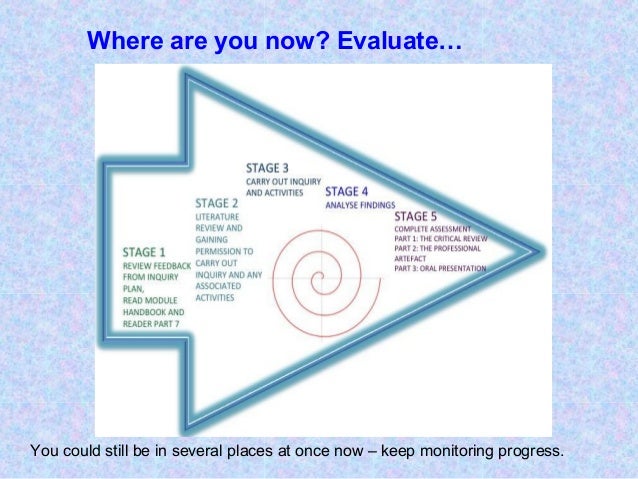
We started off by reviewing what stage we are all at and how we are managing our time and resources effectively to make the most out of the short, hectic time we have left on the BAPP course. Once again this diagram proved to be really useful:


 (Taken from the slides presented by Paula throughout the session)

Surrounding these stages, Paula reiterated how important it is for us to carry on with blogging, discussing, using our SIG's, reading our Handbooks and just generally getting involved in the whole BAPP community. When we are so close to the finishing line it is important for us not to lose focus and give up. I only know from my own experience of this Module that it can be stressful and challenging as there is so much to think about. I find myself making lists everyday and creating a timetable of what I can fit in and when. This really helps me to keep on top of the work I have to do and also to not forget a important tasks I have to completed.

I guess you could think of it as running a marathon. You train for so long and do all of the preparation (research, literature review, setting up interviews etc) that when it finally comes to physically running, it's quite a daunting task! When faced with a challenge like this, you have to think about pacing yourself and jogging along at a steady, manageable pace. It is important to not hit a wall, freak out and panic yourself into a frenzy where productivity and progress is impossible. Just keep running and you'll get there!

Image result for marathon quotes

Paula also commented on how there is almost too much information out there and when you look at how much you have accessed and collected it can seem really confusing. It is like a huge painting hung in a gallery that looms over you and challenges you to appreciate all of its intricate visuals. Paula said to focus in on a part of the bigger picture to prevent yourself from feeling overwhelmed and lost amongst your research. I have to admit that I myself am aware of how much information I need to sort through in an attempt to decide what is really relevant and beneficial to my inquiry. So I am happy to have had this reassurance from Paula to prompt me to figure out where I am and where I want to go with my inquiry.

Paula also interestingly commented that it's "not just about doing, but thinking about doing". This comment has prompted me to evaluate how I am thinking about and presenting my work. It is very easy to just be "doing" things, ticking them off your to-do list and thinking that you are done with them, when actually it is really important to expand your thinking and come up with ways to do things differently. Creative thinking is so important especially due to the nature of the BAPP course and how it encouraged us to be more creative in everything we do.

This ties in nicely with a further discussion we had about our Critical Review. At around 6000 words this should also, along with our Artefact, be an interesting and creative way of us communicating what we have found out through our inquiry. I more naturally express myself through the written word and so it is a challenge for me visual aids when presenting my work. This is something that I really want to introduce more into my thinking in an attempt to be more creative and think about what I am doing rather than just doing it.

Paula also reassured us that when we are first drafting our critical review, do not worry if it appears to be messy and too long. It is part of the process to be able to edit what is there until the final concise piece is complete. This process actually allows you to get all of your ideas and research down in one place before organising it and deciding what is really worth making it to the final cut. She also mentioned about name dropping - putting in names of authors in the body of the text who are supporting your arguments. This shows that you have done your research and can appreciate those who have gone before you and contributed to the exploration of something related to your topic area.

Finally we each individually had a shot at explaining any emerging ideas that we have recently experienced. I brought up about my first interview experience and how I collected plenty of information which I now really need to get my head around. It was fascinating listening to how other students are working through the process and finding new ways to be creative with the ideas they are discovering. I also found common ground with Charnelle as we are both holding interviews at the trade union Equity. We have agreed to have a discussion in the near future about our own research and how we can assist one another in our ideas so that was a really positive development.

Overall it was a pleasure to be involved and I look forward to the next session!

Sunday, 30 October 2016

Interview #1

Journal entry written whilst I was on my journey home following my first interview at the Equity HQ...

Feeling quite positive this evening! Finally I've got the ball rolling and held my first interview earlier on today. Prior to the interview, I was getting a bit stagnant with collecting information and was struggling to find fresh ideas to immerse myself in. I was really craving some new information to analyse and get excited about. That's why I am so thrilled with how today went. I'm pleased to have learnt so many new things about Equity itself and how it supports performers in the UK. Today's interview has opened up some new areas for inquiry and some of the ideas that emerged will be fantastic for carrying on into my next 2 interviews with professional dancers...

I was pleased with how well the conversation flowed as I must admit I was a little nervous beforehand because I wanted to make sure that I made the most out of the interview. But the interviewee was really generous with their responses offering a wealth of information for me to go away and analyse further. It was interesting to talk about just how essential Equity is for performers in the UK as well as going deeper into the free legal advice/aid services they offer to their members. 

I am glad to have come away from today having asked so many of the questions that I have struggled to find the answers to from my own secondary research. To try and keep on top of everything, I have transcribed the interview this afternoon (feeling very thankful that my voice recording turned out well) and made a few extra notes to remind myself of some of the avenues I was recommended to explore by the interviewee.    

All in all it was a successful interview!

Tuesday, 25 October 2016

Structuring my Inquiry Tools (Interviews)

I am currently in the process of organising times/dates for my interviews and focus group discussion. All of my participants have been emailed an information sheet and consent form to be signed so I feel like I am starting to get on top of things and manage my time wisely.

My biggest task at the moment is to figure out how I want to structure my interviews and focus group to get the most out of the limited time I have with my participants. As it will be the first time that I am conducting anything like this, I thought I would start by seeking some advice from Google and I found a selection of really useful websites. Beginning with a how-to-guide for conducting an interview, the following 2 links give some really useful tips:


The Open University - Conducting an Interview (Anon, undated)
https://www2.open.ac.uk/students/skillsforstudy/conducting-an-interview.php (accessed 17.10.16) 

Duke Initiative on Survey Methodology (DISM): Tipsheet - Qualitative Interviewing (Anon, undated) 
(This is a PDF document)
http://www.dism.ssri.duke.edu/pdfs/Tipsheet%20-%20Qualitative%20Interviews.pdf (accessed 17.10.16)

I have decided that my interviews will be semi-structured to give my interviewees room to respond how they like. This means that I will be making lists of questions/key points that I want to cover and I will systematically work through them with the interviewees allowing them time to provide the information they think to be the most relevant. This method deems the most suitable for my topic area due to the fact that there is currently little information out there. These interviews give me the opportunity to start gathering that information and developing lines for inquiry.

Before I even start posing questions to my interviewees, I am going to have to ensure that:

  • They consent to being audio recorded
  • They consent to the data being used for my professional inquiry
  • They are aware of the maintenance of their anonymity 
  • They do not have to answer any question they do not wish to answer 
  • They can withdraw from the interview at any stage and without prejudice  
As advised by the links above, I should strive to:
  • First explain the aim/purpose of the interview - I have written myself a short paragraph giving a general overview of my professional inquiry and what I intend to achieve from each individuals interview
  • Create a comfortable/relaxed environment - this is a bit more of a challenge for me due to the fact that 2 of my interviews are to be done via Skype however I intend to ease my interviewees with friendly, off-topic conversation before delving into the interview. I also need to ensure that I am in as quiet a setting as possible for all my interviews as I want the audio recordings to be as clear as is achievable
  • Avoid prompting "yes" or "no" answers as well as biased responses - to avoid such responses I want to make my questions broad and open-ended so that the interviewee has the freedom to answer honestly without being lead in a specific direction
  • Logical question sequence - my questions need to make sense and follow on from one another with naturally flowing transitions. In particular for myself I need to ensure that I do not over-complicate the questions/language used and make them too long  

Question types

I have found the information on question types to be particularly useful from the 2 links above. They suggested some really good question-starters if you like! Phrases such as 'Can you tell me about...?' or 'Can you give more detail...?' or 'Do you have any examples?'. I hope that by using phrases such as this I will be able to keep the interviews moving and avoid any unwanted silences or confusion. I have incorporated a few of these into my questions and will be testing them out with my first interview which will take place this Thursday. I will update you on how it all goes - hopefully smoothly!  

Recording my interviews

I will be taking a separate recording of each interview so that when I come back to analysing the data, I will be able to quickly refresh my memory on the discussion that took place and take very accurate quotes from the interviews should I so wish. I will also be taking concise notes of any points raised which I think to be important. I want to ensure that I do not miss out on any key information that could benefit my research. I will be looking further into transcribing the data following the interviews over the next couple of weeks so look out for updates!
Image result for interview questions
More details to follow on how I will be structuring my focus group...